Our projects
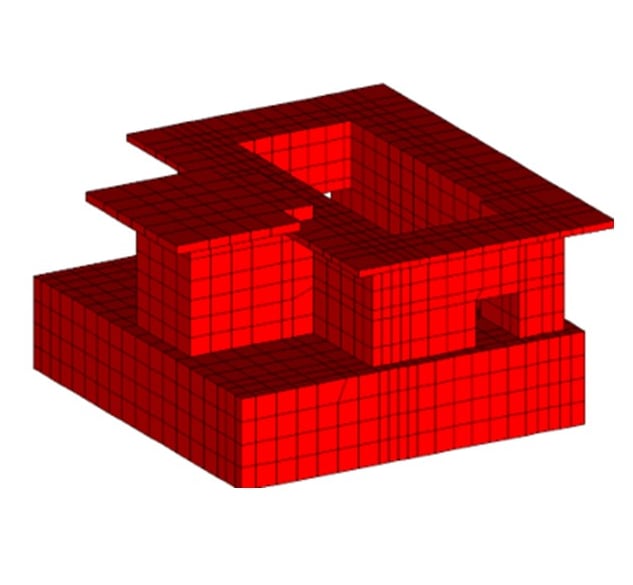
Compatibility Study of 16.5 MW TG Foundation for accommodating new 22 MW TG
A detailed assessment of an existing 16.5 MW TG foundation was performed to verify suitability for a 22 MW upgrade.
NDT and dynamic analyses revealed reduced concrete strength (≈ M20) and close resonance with operating speed.
Structural modifications—such as removal of bracings, column strengthening, and isolation from adjacent structures—were recommended to ensure safe and vibration-free operation.
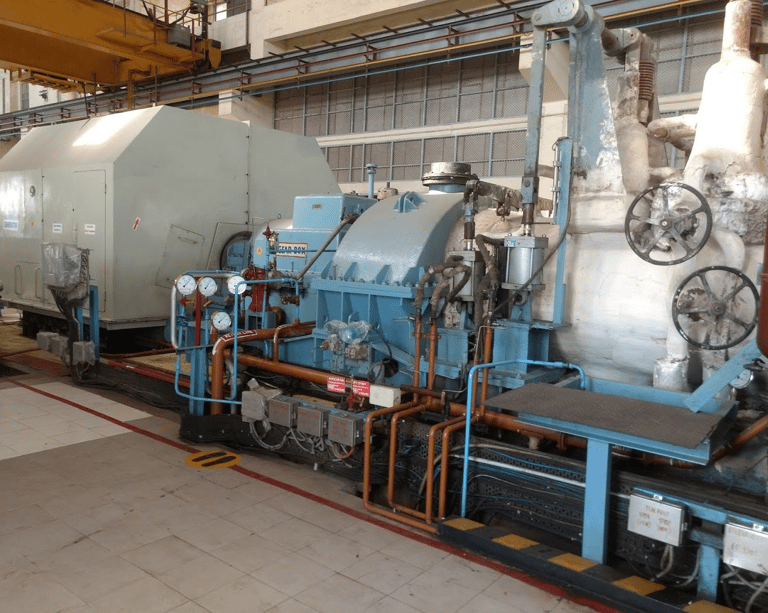
55 MW TG Foundation - Dynamic Response Analysis
New Siemens Turbine with Existing Generator Foundation Retrofitted
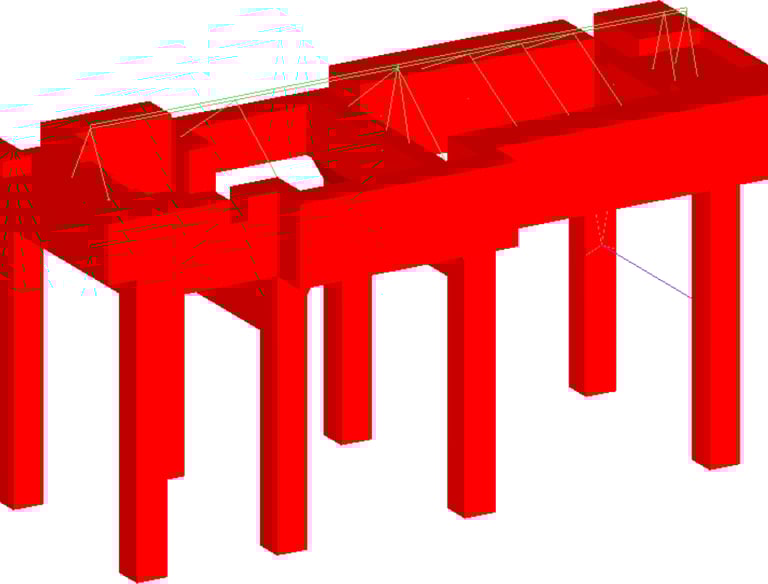
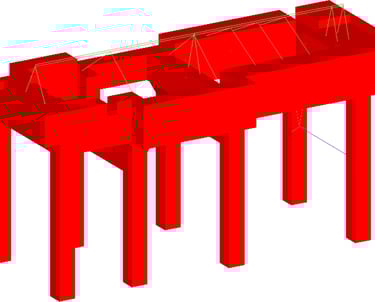
A comprehensive compatibility study was performed for an existing 55 MW turbine foundation to evaluate its suitability for a new, higher-capacity turbine installation.
The scope included NDT testing, vibration measurements, and detailed dynamic analysis to assess concrete quality, stiffness variation, and foundation response under new operating loads.
Results indicated reduced foundation mass and higher vertical frequency (~50 Hz) near the operating speed, requiring close monitoring of dynamic behavior.
All response amplitudes were within permissible limits, confirming safe adaptability of the foundation for the upgraded turbine with appropriate dynamic considerations.
Design of 36 MW TG Foundation
Static and Dynamic Analysis
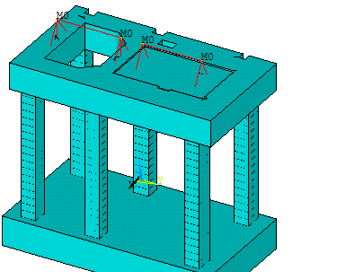
A detailed design and dynamic analysis was carried out for a 36 MW Turbo Generator foundation. Member proportions were optimized to minimize eccentricity between the centers of mass and stiffness, maintaining values within the 5% allowable limit in both directions.
Modal analysis identified the first natural frequency at 2.94 Hz (longitudinal mode) and higher modes up to 65 Hz.
Computed vibration amplitudes were below 5 microns at operating speeds and below 20 microns during transient conditions, ensuring safe performance under steady and start-up/shut-down phases.
The foundation was also verified for bearing failure loads, confirming structural and dynamic adequacy for reliable turbine operation.

Dynamic Analysis of Press Foundation
Static and Dynamic Analysis
Dynamic analysis of an HT Press foundation supported on piles was conducted using vendor-supplied machine data and site-based pile properties.
Unbalanced dynamic loads were computed as per ISO 1940 (Balance Grade 2.5) and applied at 19 Hz.
The free vibration analysis showed natural frequencies about 40% higher than the excitation frequency, confirming safe separation.
Transient and steady-state analyses indicated very low vibration amplitudes, with maximum values around 9 microns during start-up and below 5 microns under steady operation, ensuring stable machine performance and foundation integrity.
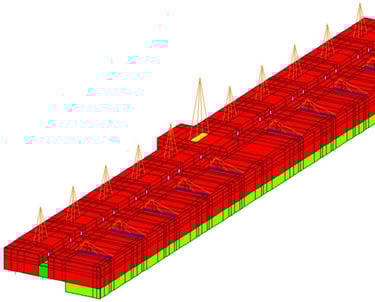
High Vibration Problem
1 x 15 MW - Air Cooled Condenser
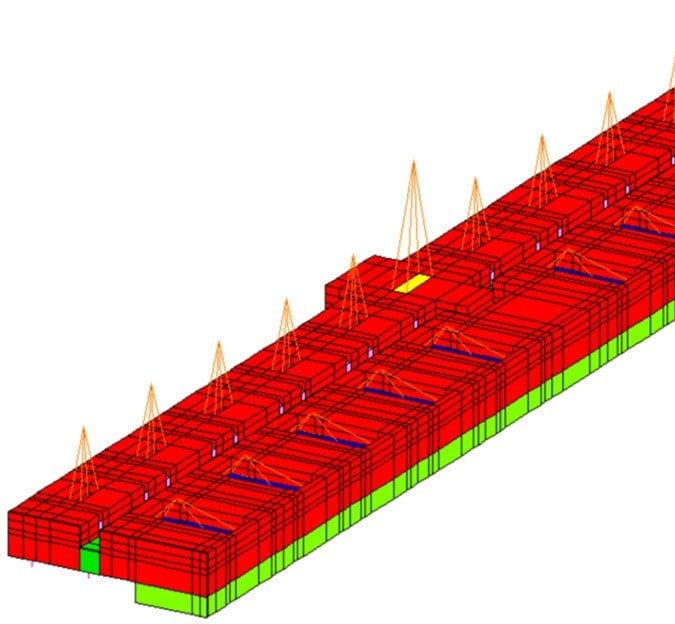
A detailed vibration assessment was carried out for the RCC structure supporting air-cooled condensers of a 15 MW power unit. Measurements were taken across four motor–fan assemblies using a precision vibration meter at over 120 points covering the machine, steel frame, and RCC structure.
While the RCC structure exhibited vibrations within permissible limits, the motor–fan units showed excessive vibration levels exceeding the allowable rms velocity of 2.5 mm/s.
Recommendations included FFT-based vibration analysis for source identification, dynamic analysis of the supporting structure, and ensuring separation between structural natural frequencies and machine operating speeds (106 rpm, 636 rpm, 1486 rpm).
The study emphasized corrective actions on both machine balancing and steel frame redesign to ensure long-term structural and operational safety.

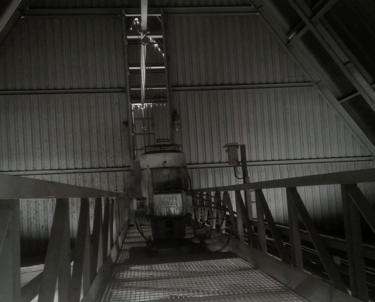
Abnormal Vibration in the Drier House Structure
Vibration Testing of Grader Structure
A detailed vibration investigation was performed for the grader and packaging structure at a sugar plant that experienced repeated failures at column–bracing junctions.
Comprehensive vibration measurements were taken at multiple structural levels and across machine supports, followed by FFT-based frequency analysis.
The study revealed a direct resonance at 16.7 Hz between the grader excitation and bracing frequencies, causing excessive stress and weld failures.
Recommendations included strengthening of column–bracing zones, modification of bracing configurations to minimize moment transfer, and re-design of flooring and gratings to account for dynamic excitation.
The analysis helped identify the root cause and guided targeted retrofitting measures, ensuring reliable operation under dynamic loading.
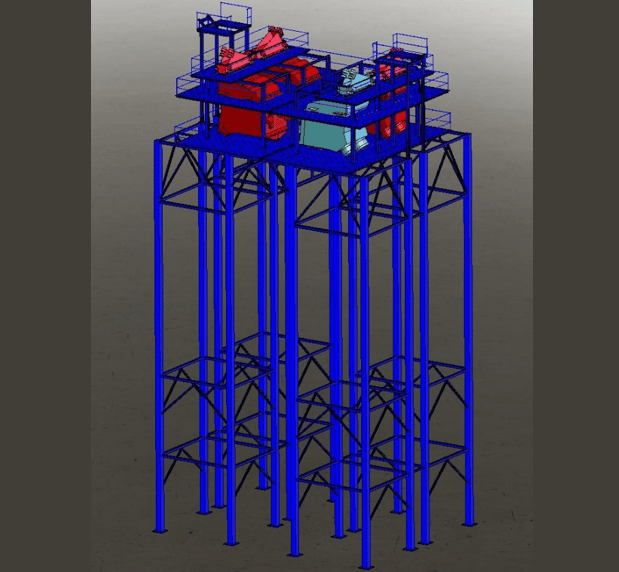
High Vibration Problem
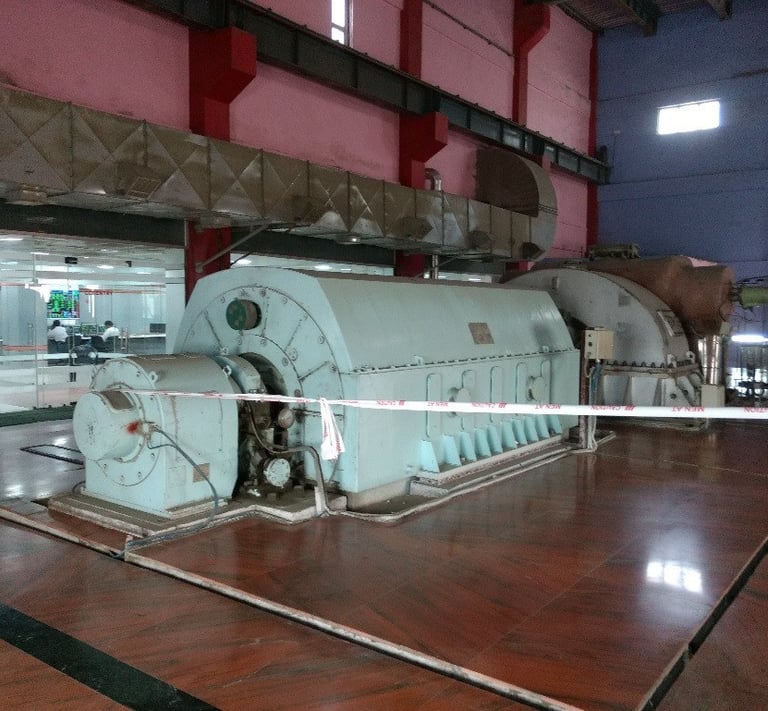
Influence of 25 MW Turbogenerator Set on high machine vibrations
A detailed vibration study was conducted for a 25 MW Turbo Generator foundation experiencing persistent high vibration levels.
Site inspection and vibration testing revealed that structural connectivity - including columns tied to the finished floor and cooler walls—was significantly affecting the foundation’s dynamic behavior.
Ad-hoc stiffening measures, such as added beams at mid-column height, were found ineffective.
Recommendations included isolating TG columns from floor and adjoining structures, removing secondary stiffening beams, and rectifying misalignment at the generator bearing.
These corrective measures were expected to substantially reduce vibration amplitudes by restoring proper foundation flexibility and dynamic separation.
High Vibration Problem in Stock House Structure
FFT Analysis
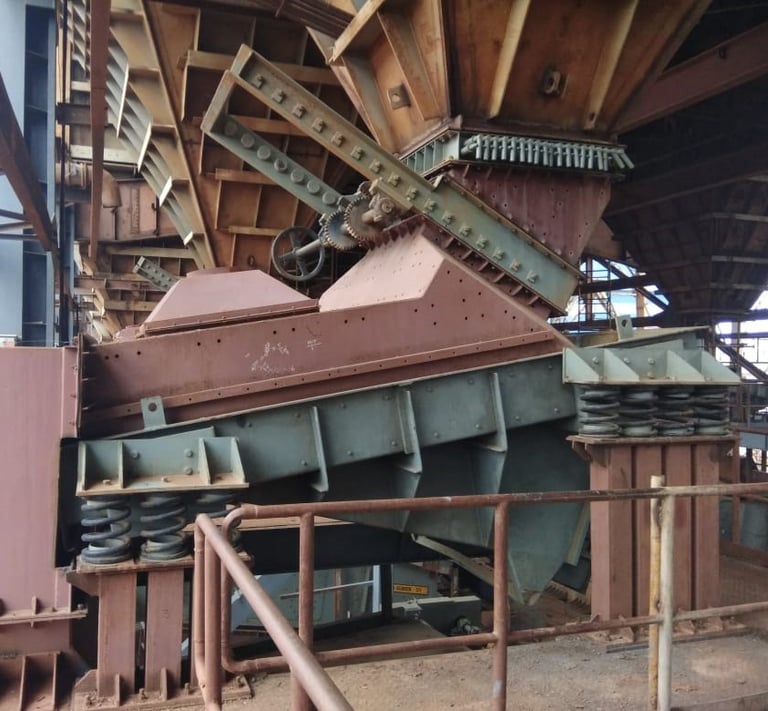
A detailed vibration investigation was performed on the sinter screen and vibro-feeder support structures to identify causes of persistent high vibrations. Measurements and FFT analysis indicated that while the main support frame was detuned from machine operating frequencies, the screens and feeders exhibited strong transverse vibrations due to unbalance and spring-mass eccentricity.
The study recommended rebalancing of screens and feeders, redesign of pedestals with stiffness ≥10× spring stiffness, and modification of the underlying framework to prevent resonance under variable frequency operation.
Additional recommendations included resizing of chequered plates and review of bracing members for frequency separation to ensure long-term structural and operational reliability.
3750 kW Blower Foundation Design
Dynamic Analysis and Strength Design
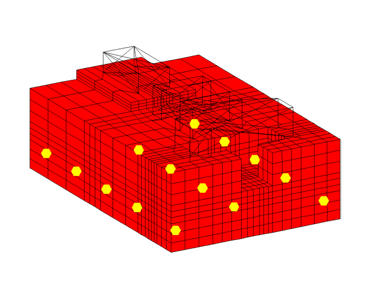
A complete foundation design and dynamic analysis was carried out for a blower fan supported on piles. The foundation and pile layout were optimized to minimize eccentricity between the centers of mass and stiffness.
Free and forced vibration analyses confirmed that the first six modes were rigid-body modes, well below the operating speed of 1485 rpm, and higher modes were safely above the maximum operating speed, eliminating any risk of resonance.
Response amplitudes were below 3 microns, and computed stresses remained within 3.2 MPa, well under the permissible limits for M30 concrete — ensuring long-term structural integrity and vibration-free operation.

Design of 23 MW STG Foundation
Dynamic Analysis and Strength Design
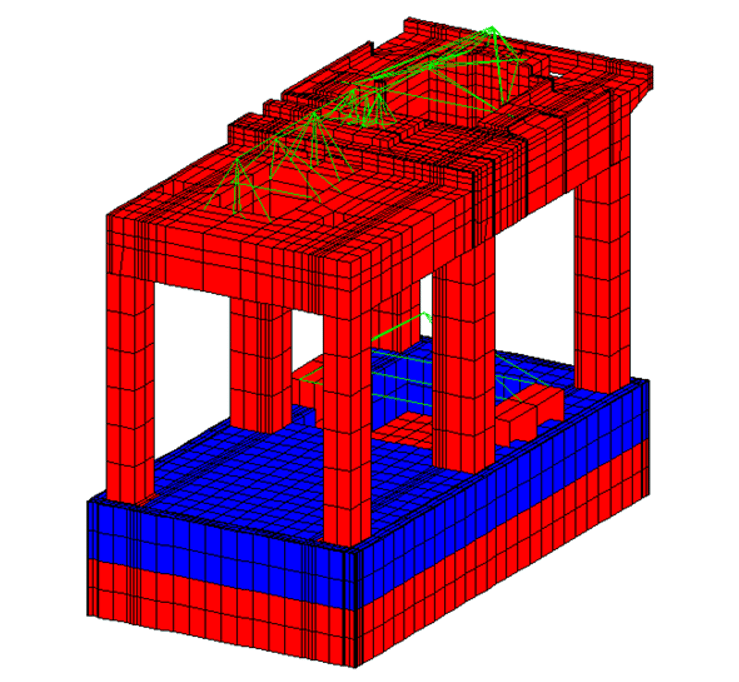
A detailed foundation design and dynamic analysis was completed for a 23 MW Steam Turbine Generator (STG).
The pile layout and base raft were optimized to minimize eccentricity between the centers of mass and stiffness, ensuring balanced dynamic behavior.
Finite element analysis was conducted using NISA software, and results showed maximum vibration amplitudes of 8 microns at bearings and 6 microns at the top deck, all well within permissible limits across the full operating speed range.
The study confirmed that the foundation is dynamically stable and structurally sound, ensuring smooth and reliable machine performance.

ROD Mill Foundation Design
Alumina Refinery Plant
A comprehensive foundation design and dynamic analysis was carried out for a Rod Mill installation based on machine data and site-specific geotechnical inputs.
The foundation, supported on 750 mm dia, 20 m long piles, was optimized to achieve minimal eccentricity (0.12% along X and 0.27% along Z).
Dynamic analysis confirmed that all natural frequencies were well separated from the machine operating speeds, eliminating any risk of resonance.
Maximum vibration amplitudes recorded were 120 microns at the mill centerline, 100 microns at pedestals, and less than 1 micron at motor level, all within permissible limits.
Stress levels throughout the foundation were well below allowable limits, ensuring safe, stable, and vibration-free operation under all load conditions.
Ball Mill Foundation Design
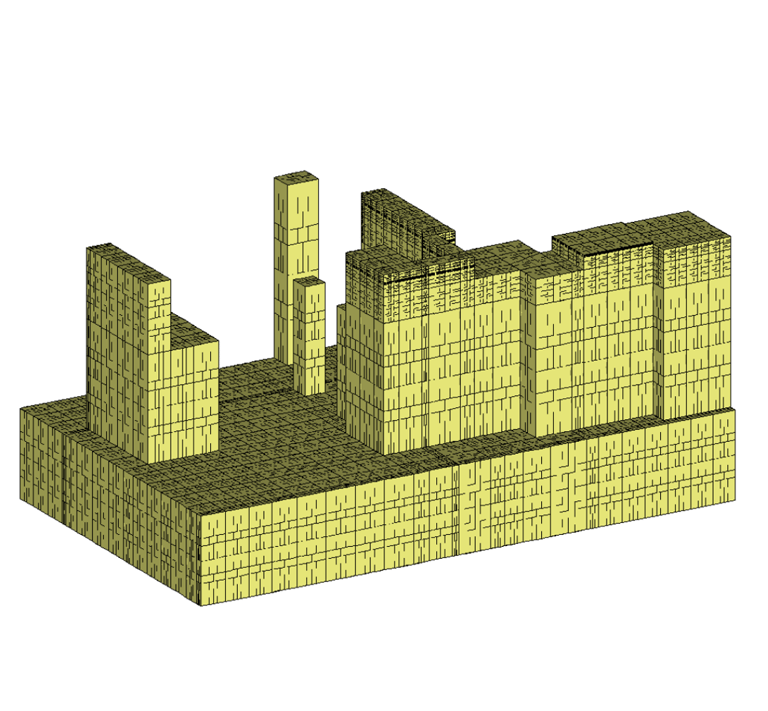
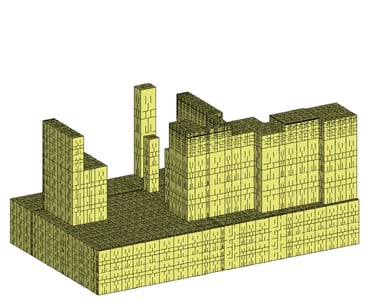
A complete dynamic foundation design was carried out for a Ball Mill installation based on data from the machine supplier. The foundation, designed in M35 concrete, was optimized to achieve very low eccentricity (<0.6%), ensuring balanced behaviour under dynamic loading.
Free and forced vibration analyses confirmed comfortable vibration levels, with amplitudes of 514 microns at the mill centreline, 153 microns at foundation level, and around 40 microns at the reduction gear and pinion — all within permissible limits.
Stress levels across the foundation were within allowable values, with pedestal stresses remaining acceptable.
The study confirmed safe and stable machine performance, with a recommendation to stiffen mill pedestals to shift their frequencies safely outside the rigid-body mode range.
Finite Element Analysis of ID Fan Foundations to eliminate Resonance Phenomenon
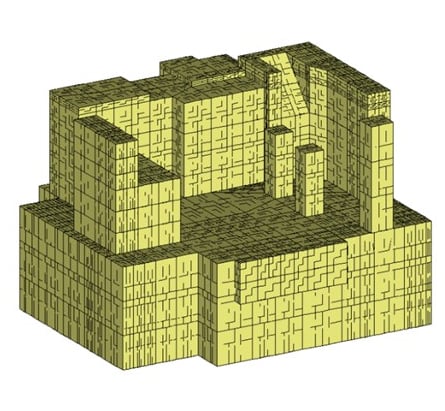
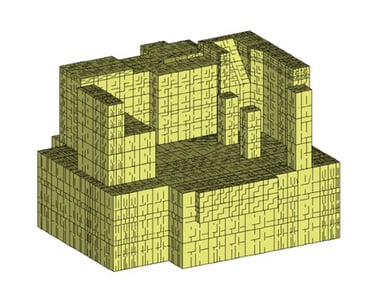
A detailed Finite Element Analysis (FEA) was undertaken for four ID Fan foundations experiencing high vibrations in the GTC-1 area. The study focused on evaluating the dynamic adequacy of the existing foundations under actual operating conditions and identifying causes of excessive vibration affecting fans, foundations, and associated ducts.
As part of Phase 1, the existing foundation models were analysed, and an iterative redesign approach was adopted to eliminate resonance within the available plan area. The objective was to achieve acceptable vibration levels and ensure reliable fan performance.
Phase 1 covers foundation behaviour only, whereas Phase 2, if required will address the much more complex dynamic performance of outlet ducts from fan exit to chimney.

Dynamic Analysis and Design of Crusher Mill Foundation
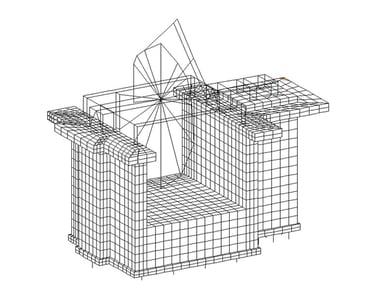
A complete dynamic design was carried out for the Hammer Crusher foundation, supporting a 64-ton crusher assembly driven at 1000 rpm and incorporating a 17-rpm Travelling Breaker Plate (TBP).
The machine is mounted on a table-top frame foundation comprising a top deck, six columns, and a base raft supported on piles. The design was executed in accordance with IS 2974 (Part 3): 1992, with permissible amplitudes adopted from IS 2974 (Part 4) for hammer crushers.
Foundation members and pile layout were optimized to achieve very low eccentricity (<0.2%), ensuring balanced dynamic behaviour.
Free and forced vibration analyses were performed as per codal provisions, confirming compliance with amplitude limits and safe dynamic performance under all operating conditions—including seismic effects as per IS 1893 (Part 4).

Dynamic Response Analysis
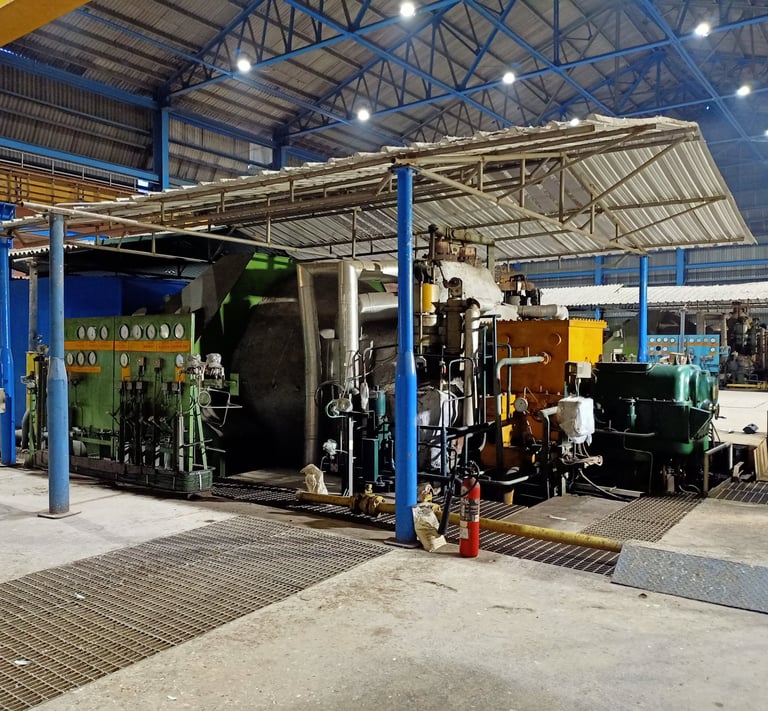
New Siemens Turbine with Existing Generator - Foundation Retrofitted
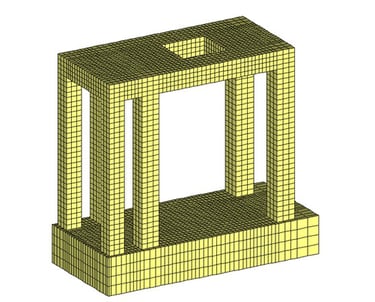
A detailed compatibility assessment was performed to evaluate whether a new 55 MW Steam Turbine could be safely installed on an existing TG foundation. The study included NDT testing, vibration measurements, and dynamic analysis under both existing and proposed machine loads.
Tests indicated significant variation in concrete elastic modulus, so a range of 3.3E4 to 7E4 MPa was used for response evaluation. While some high vibrations were observed on the existing machine—particularly at the coupling and turbine front bearing—the foundation itself showed acceptable vibration levels except for one column with frequency proximity to the 50 Hz operating speed.
Dynamic analysis with the new turbine showed maximum amplitudes within permissible limits (up to 32 microns vertically at the deck and 23 microns transversely).
Although the foundation mass was lower than typically expected for such machines, leading to a vertical mode near 50 Hz, the overall behaviour remained dynamically acceptable, indicating that the foundation can safely accommodate the new machine with appropriate operational considerations.
High Vibration Problem on 25 MW TG set
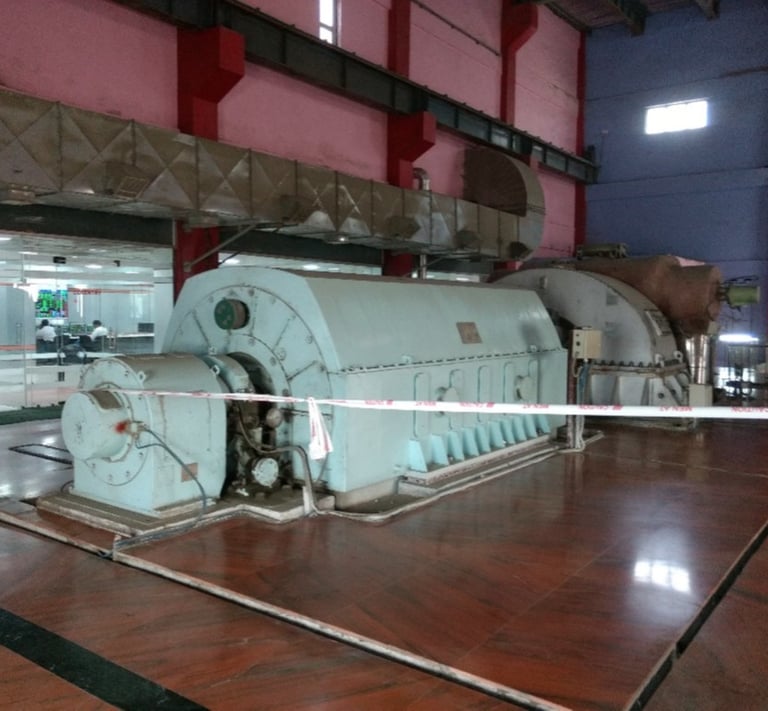
Influence of TG Foundation on High Machine Vibrations
A site investigation and vibration measurement campaign identified excessive vibrations in the 25 MW TG foundation caused by column–floor connectivity, cooler walls tied to columns, and ineffective past stiffening measures. Separation of one column immediately reduced vibration, confirming boundary-condition influence. Recommendations included isolating columns, removing added beams, and correcting bearing misalignment to restore proper dynamic behavior.
Design of Foundation for 20 MW Turbo Generator
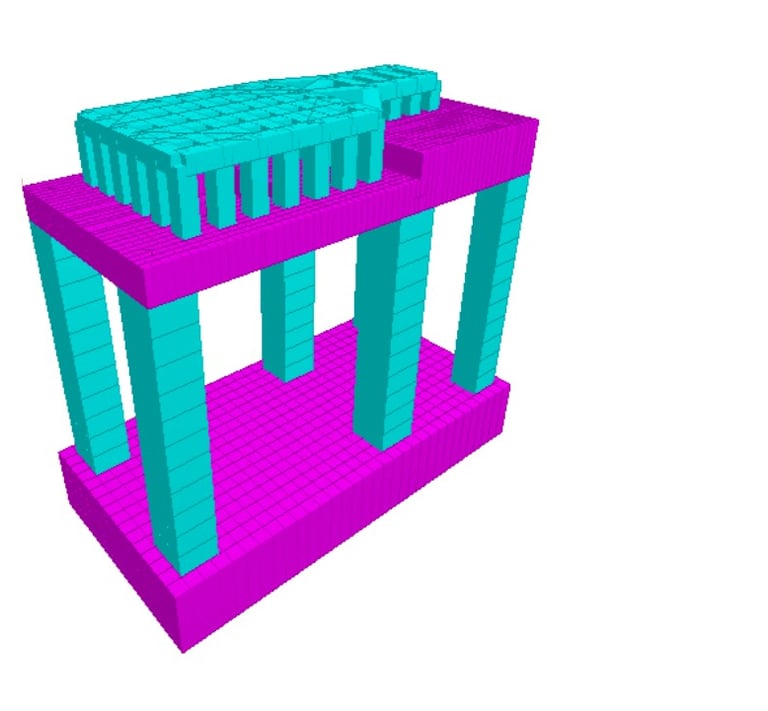
The TG foundation was designed in line with codal provisions and industry best practices. The top deck, sized as per machine supplier requirements (15 m × 7 m), uses variable thickness—1000 mm at the turbine side and 1812 mm at the generator side—based on weight and frequency considerations.
Feasibility Study of 2 MW TG Foundation to Accommodate 3 MW TG
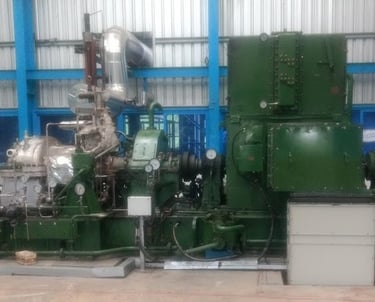
A staged evaluation was performed to verify suitability of the existing TG foundation for a new 3 MW turbine.
Vibration tests on the running 2 MW unit showed low amplitudes (10 microns). NDT results confirmed good concrete quality with no defects.
A Doctor Skid was designed with natural frequencies safely detuned from machine speeds. Dynamic analysis showed adequate frequency separation and vibration levels within limits.
Strength checks confirmed the existing foundation can safely resist the new machine loads.
Overall, the 3 MW TG can operate reliably on the current foundation, assuming proper machine balancing.

Dynamic Analysis for Adequacy Check of Proposed (Modified) Foundation for Sales Gas Compressor at SGP
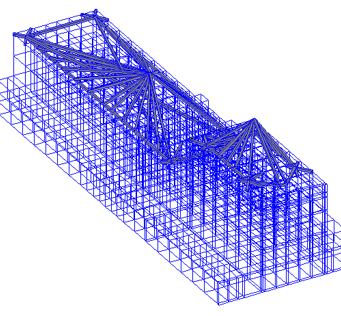
A dynamic evaluation was performed for a Sales Gas Compressor foundation, where the existing motor was being replaced and minor pedestal cracking required partial concrete removal and recasting with 20 mm dowel anchorage.
Due to outdated soil data, analyses were carried out over a range of soil shear modulus values, using both Elastic Half Space (EHS) and Subgrade Reaction (SGR) methods.
Free vibration and response studies were conducted in STAAD.Pro, with verification through manual checks.
Across all soil stiffness scenarios, the foundation showed very low vibration amplitudes—maximum 13 microns (EHS) and 15 microns (SGR)—indicating safe dynamic behaviour for the new motor installation.
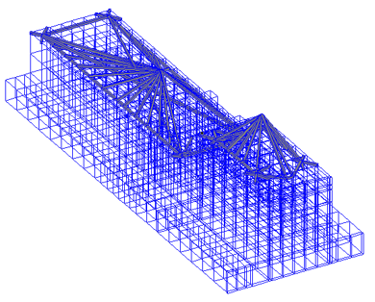
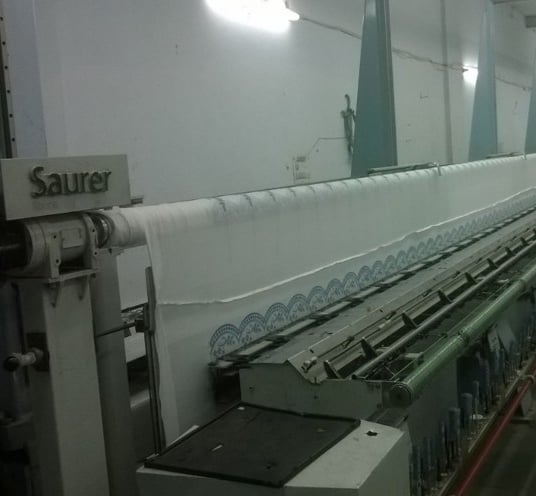
High Vibrations during operation of Embroidery Machines
A vibration investigation was carried out for three machines and their foundations. All machines showed acceptable vibration levels, confirming healthy machine–foundation performance. However, Machine #3 was found to influence vibrations at the first-floor level, likely due to resonance between the floor system and machine operating speed.
While floor vibrations remain within safety limits, they are causing noticeable discomfort to personnel. Evaluation of the beam–slab natural frequency by a structural engineer was recommended.
Additional recommendations included rechecking support levels and bolt tightness for Machine #3, ensuring isolation gaps between machine foundations, and avoiding stone-slab flooring on steel beams at mezzanine level due to poor seismic performance.
Design Review and Modification of existing JAW Crusher Foundation
To eliminate High Vibrations due to its operation
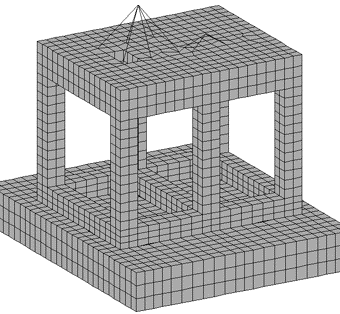
A review of the Jaw Crusher foundation indicated that it was undersized and not designed for dynamic loads, with concrete quality also below the intended grade. The foundation response was dominated by soil flexibility, contributing to column distress.
To shift natural frequencies away from the operating speed, cross bracings between Frames 2 and 3 along the longitudinal direction were recommended. This modification is expected to significantly improve dynamic performance.
If high vibrations persist even after bracing, the only viable solution would be to introduce piles outside the existing raft and connect them to the base raft for enhanced stiffness.
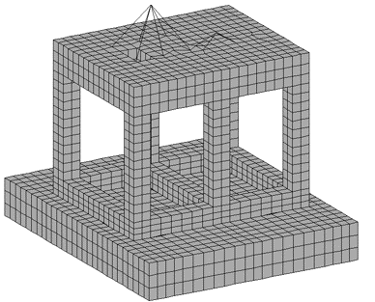
Design of ID Fan Foundation
Alumina Refinery Plant
The ID Fan foundation is designed on 25 piles with very low eccentricity. Natural frequencies are safely away from fan speed, though achieving the specified 1400 cpm margin is not feasible. Supplier’s dynamic forces are 11–25× higher than expected and should be verified. Steady-state amplitudes are within limits; transient peaks arise only due to inflated force inputs. Avoid 3–5 Hz during VFD operation. Overall stresses are low and performance is expected to be satisfactory.